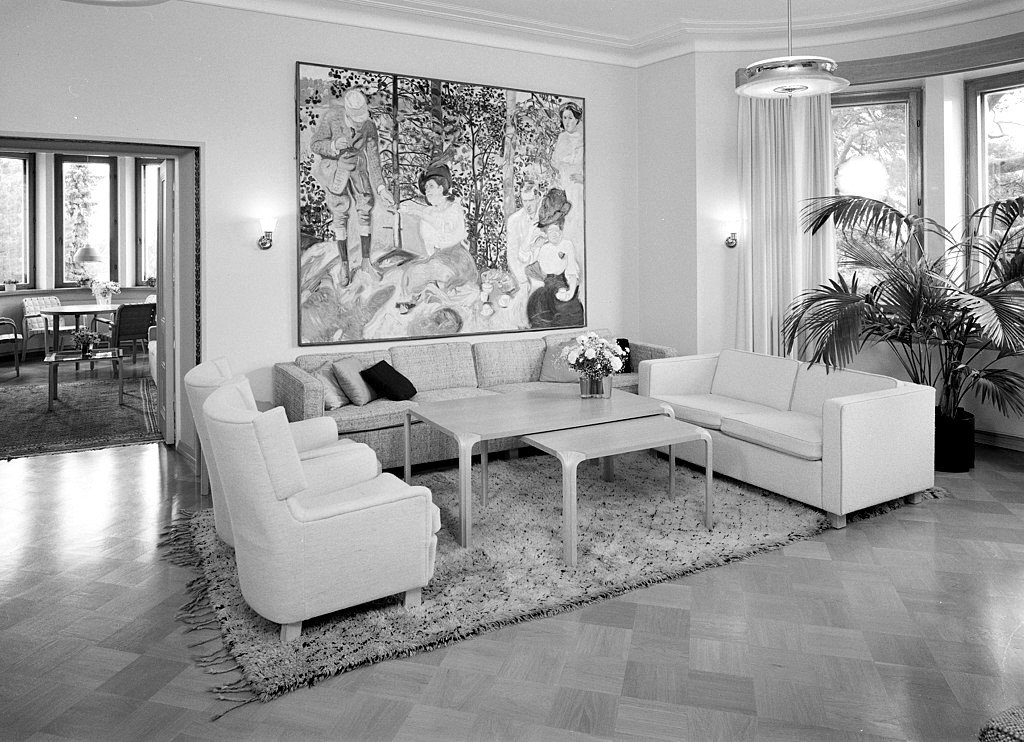
The fictional house where David Michon’s childhood dreams often took place looked something like this, with a distinct upstairs and downstairs. 
Michon’s dream house was “a threshold into a different type of space.” 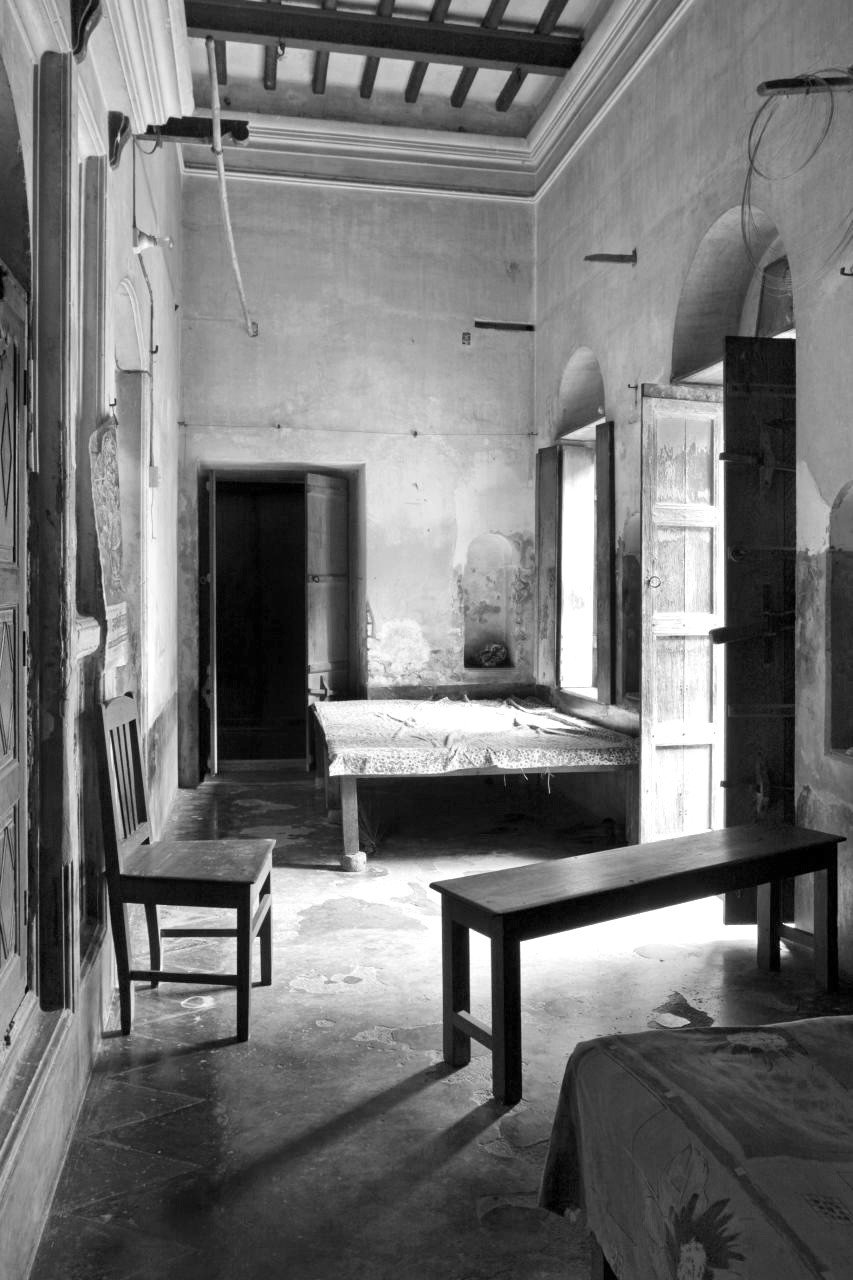
A vision of how the upstairs level of Michon’s dream house appeared.


David Michon runs the design Substack FOR SCALE.
“I think it is, to some extent, not unfamiliar to many people to have dreams recur in a certain setting. During my late childhood and teenage years, my dreams took place in the same house. There was no location. No exterior. No neighborhood. It was totally self-contained. What always felt very remarkable was that the house was very distinctly the same house, and never changed. It was a set. And all variety of dreams happened in it.
This was not my actual house—I grew up in a residential neighborhood in the center of a city—but I understood it to be my house. It was in fact a version of my uncle’s house, a home I’m familiar with but wasn’t mine. So it was a threshold into a different type of space.
It had two distinct parts: the downstairs floors, which were old and creaky, and kind of Addams Family. And then upstairs there was a small, narrow hatch and ladder that would take you into an attic. In a nightmare, that hatch and ladder would feel claustrophobic and difficult to maneuver, while in other dreams it felt like a secret escape, a cherished little passage, known only to me. The upstairs was very expansive in the way dreams can be. Like, you understand it from afar to be a small space, but then once you’re in it, it expands.
I haven’t spent too much time psychoanalyzing this, but I think the influence that house had on me is: There was something very cinematic about it because it was such a contained story. No matter what happened in a dream, I knew it would never extend beyond this space. There was a comfort in knowing the lay of the land, that there would be no surprises in terms of physical space.
This certainly has informed how I think about domestic space now, and has a lot to do with the point of view of FOR SCALE, which is so much about home as a personal mythology. Home is a recurring setting, but there’s so much symbolic importance to it.
I also think the dream house speaks to how much I value emotional comfort in a home. I mean, who doesn’t? I had a great childhood, a loving family. I felt a lot of emotional comfort as a child. It just wasn’t associated with the physical [house].
The aesthetics of home and the importance of space is something a lot of people who are interested in design are into. And usually that’s paired with a broad interest design, which I also have, to some extent. But the reason I focus on domesticity [with FOR SCALE] is because it was so psychologically formative to me—what a home represented in an imagination, in a subconscious, rather than what paint color was chosen for its walls.
What is so exciting about the domestic interior, especially your own domestic space, is how personal it is. This is not a revolutionary thought. There are a lot of really incredible spaces—a gallery space, a theater, a shop, whatever—that you can pick apart aesthetically and critique and try to understand the cultural context of. But it sits at a very superficial level.
When you walk into someone’s house, you are learning about them. You’re learning about their psyche, their interests, the way that they live. That just feels like a much richer experience. The dream house helped me [understand] this: Domestic spaces are sites for psychological meaning, deeply personal expression and literal dreams. If it’s done well, they express the way you want to live.
‘Done well,’ for me, means done for yourself, and done with great thought. A plague in the design world is this institution of a hierarchy of taste—that some people have better taste than others. That the people who are floating around design fairs looking at thirty-thousand-dolar tables have a better idea about the value of those things than others. There’s a lot of very rich people with a lot of means and a lot of so-called ‘taste’ who have incredibly boring, useless homes.
Think about wardrobe, for example: Clothes are very public. They’re something you put on to walk around in, and it’s so much about how you want to be perceived. There’s just not that same pressure on your home. You don’t have to invite anyone there. It doesn’t need to be for anyone else but you. And so when people don’t let at least some of that energy into their space, then that’s, for me, when it feels a bit useless. When you’ve wasted a great opportunity.
As many interior designers there are who can put together a great room, there are a precious few who can do it in a way that feels genuinely personal. That feels emotional and super nuanced, and where they let a few cracks in, because that’s what people are like. Ultra-perfected spaces just fundamentally to me are not as interesting as these.
All of this feels like the mission of FOR SCALE, which is like, Let’s remind ourselves how exciting [our homes] can be, and how, with these daunting choices about interior design, the objective doesn’t need to be perfection. The objective is feeling stronger emotional connections to the space around you.
I’m not advocating for unbridled materialism, but this is why trends are so unappealing: They’re about a kind of blind participation. Everyone can tell when you walk into a house and someone’s made all of their own choices. It has a totally different feeling, and whether people are conscious of it or not, we all can feel it. There are too few places where people are exploring what that emotional side of design is about.”
This conversation has been edited and condensed. (Photos courtesy Wikimedia Commons)