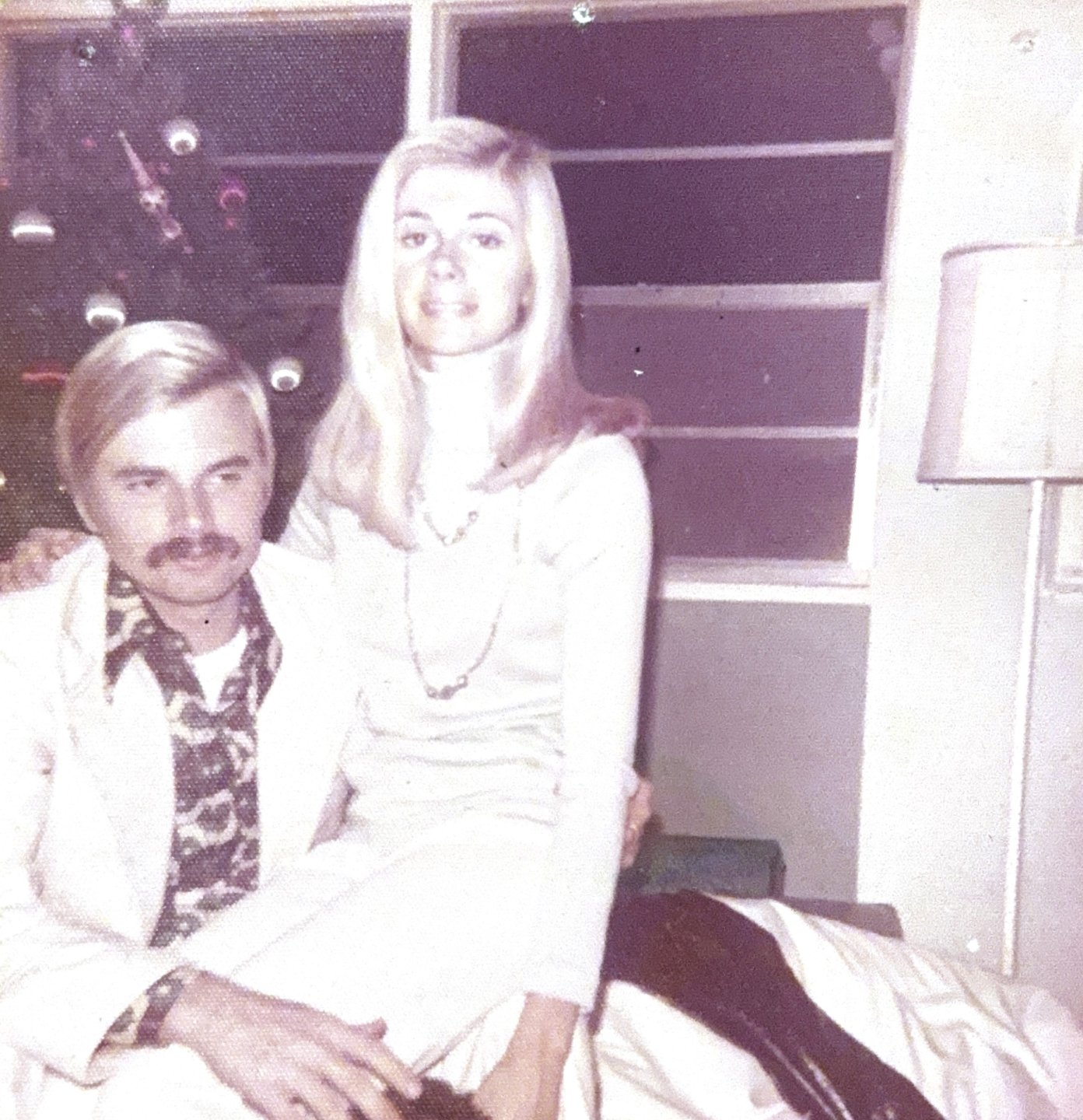
Sam Klemick’s parents, in 1973. 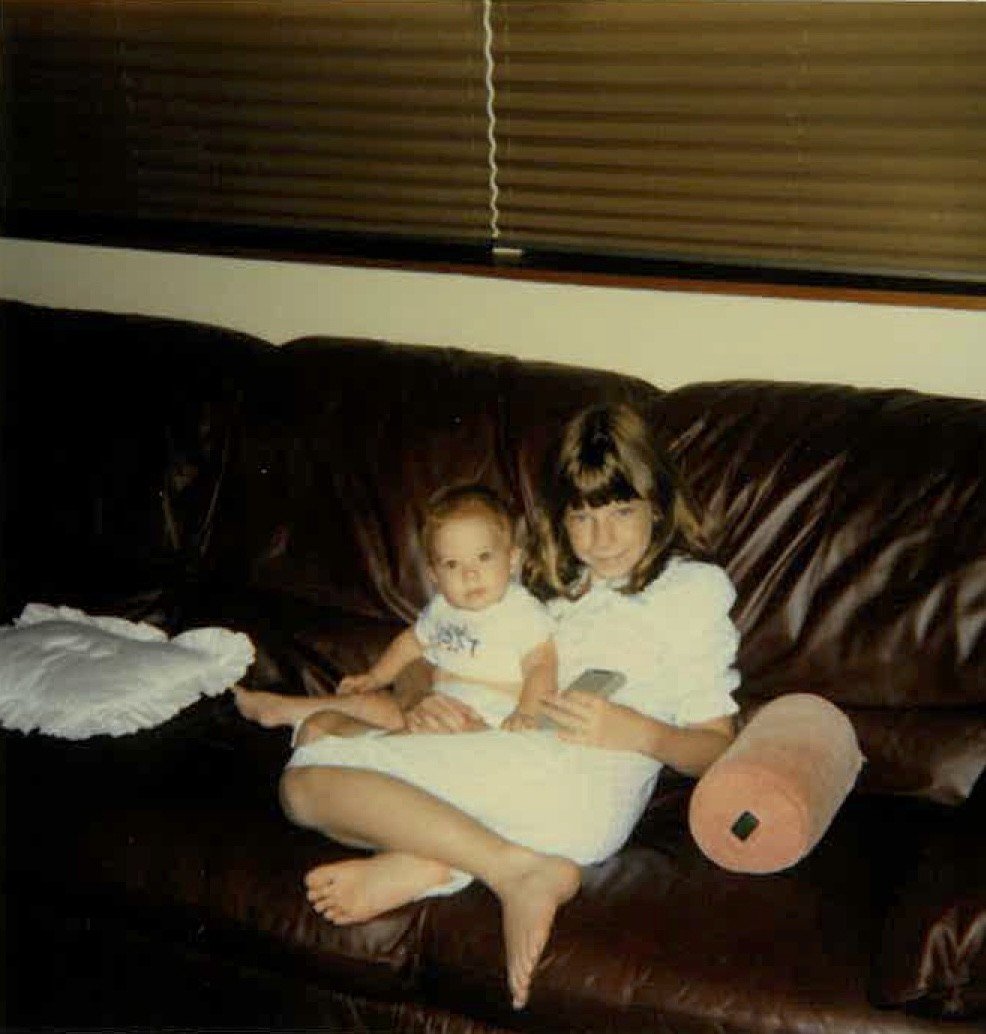
The family’s brown leather couch remains clear in Klemick’s memory. 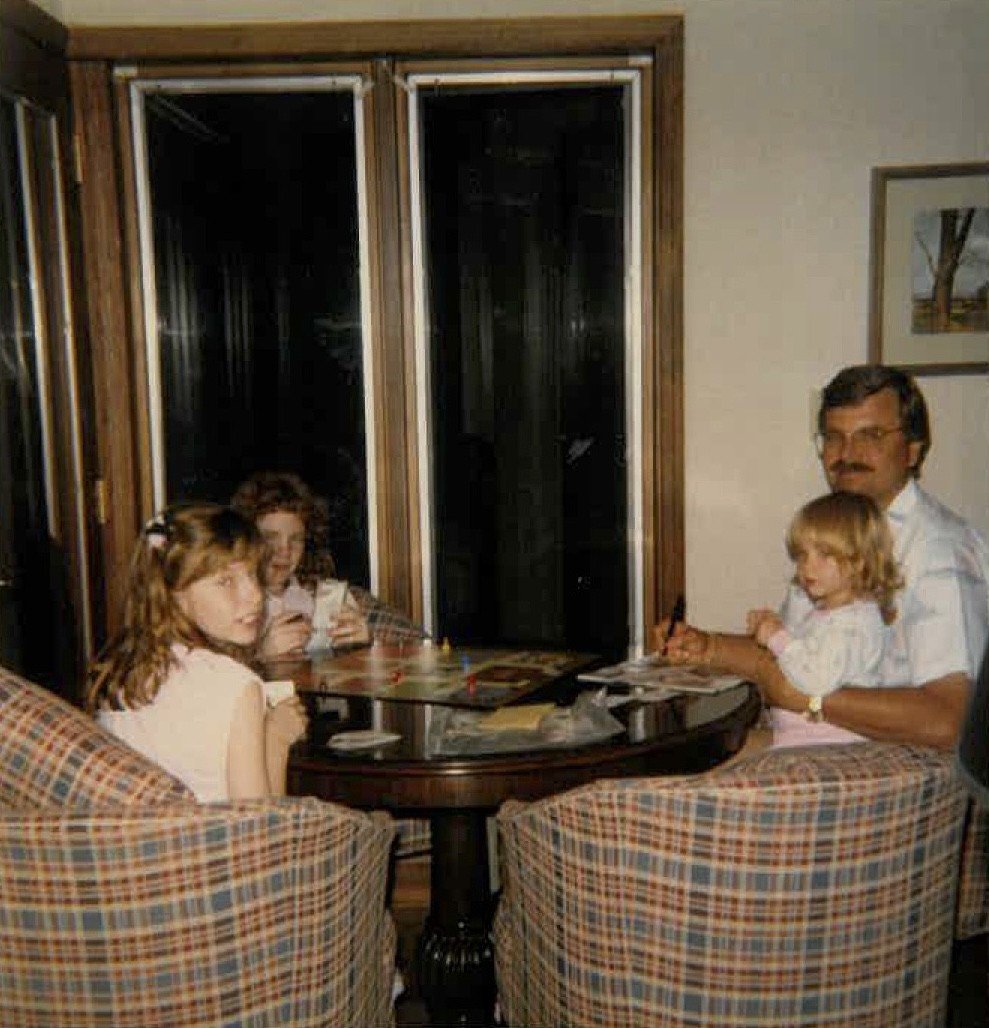
Plaid leather chairs surround a wooden table that remains in the family.


Sam Klemick is a furniture and object designer based in Los Angeles.
“My parents moved to Miami in 1970 from Champaign, Illinois. My mom grew up in South Dakota and my dad in Champaign, both shaped by the quiet modesty and comfort of the Midwest. The houses I grew up in reflected the region’s shadowy interiors: brown leather, yellowed lighting—a world apart from Miami’s blinding sun and tropical landscape.
I was born in 1986 in a house on Grove Street. It was the heyday of Miami Vice: neon, glass, black walls. But in our home, the feeling was grounded, dark, familiar. I remember my mom in the kitchen making mashed potatoes while soap operas played softly on the small TV behind her. The warm amber light of our home always felt dim compared to the brightness outside, but it was comforting.
That feeling stood in stark contrast to the Miami aesthetic we saw on TV, but also to my friend’s homes, which had modern furniture, glass walls, and white interiors. Stepping outside into Miami’s light felt like entering another world. Inside, though, our domain was made of dark wood furniture, wood paneling, and ornate seventies rugs.
Our brown leather sofa remains clearest in my memory, soft and deep in color. It was always there, in every house we moved to while I was growing up. I can remember my skin sticking to it as I lay there over the summer, noticing the smell of the leather and how it slowly wrinkled over time. I always thought the sofa was a bit drab. Yet it was a reflection of my parents’ upbringing, their quiet resistance to flashiness in a city defined by it.
There were also plaid armchairs, blue and red. A pattern my parents might’ve thought carried a touch of Old World charm. They surrounded a dark wooden table, where we played cards. When my grandfather was alive, the chairs rolled around on brass casters, comfortable and oversized. All the furniture in the house was almost too big for the rooms, but it was furniture you could relax into, feel safe in.
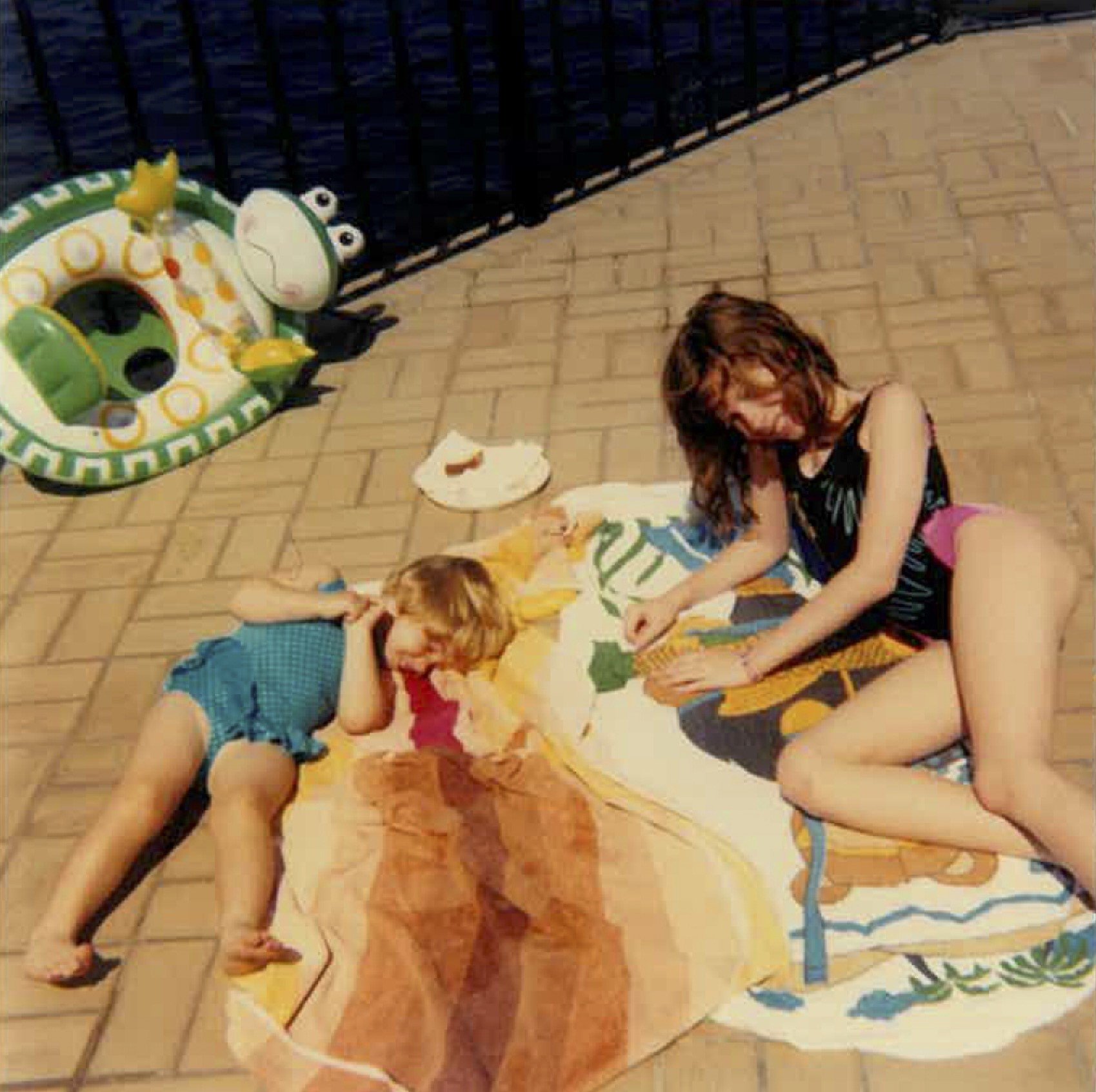
The designer in the sun. 
The wooden table, still in use today. 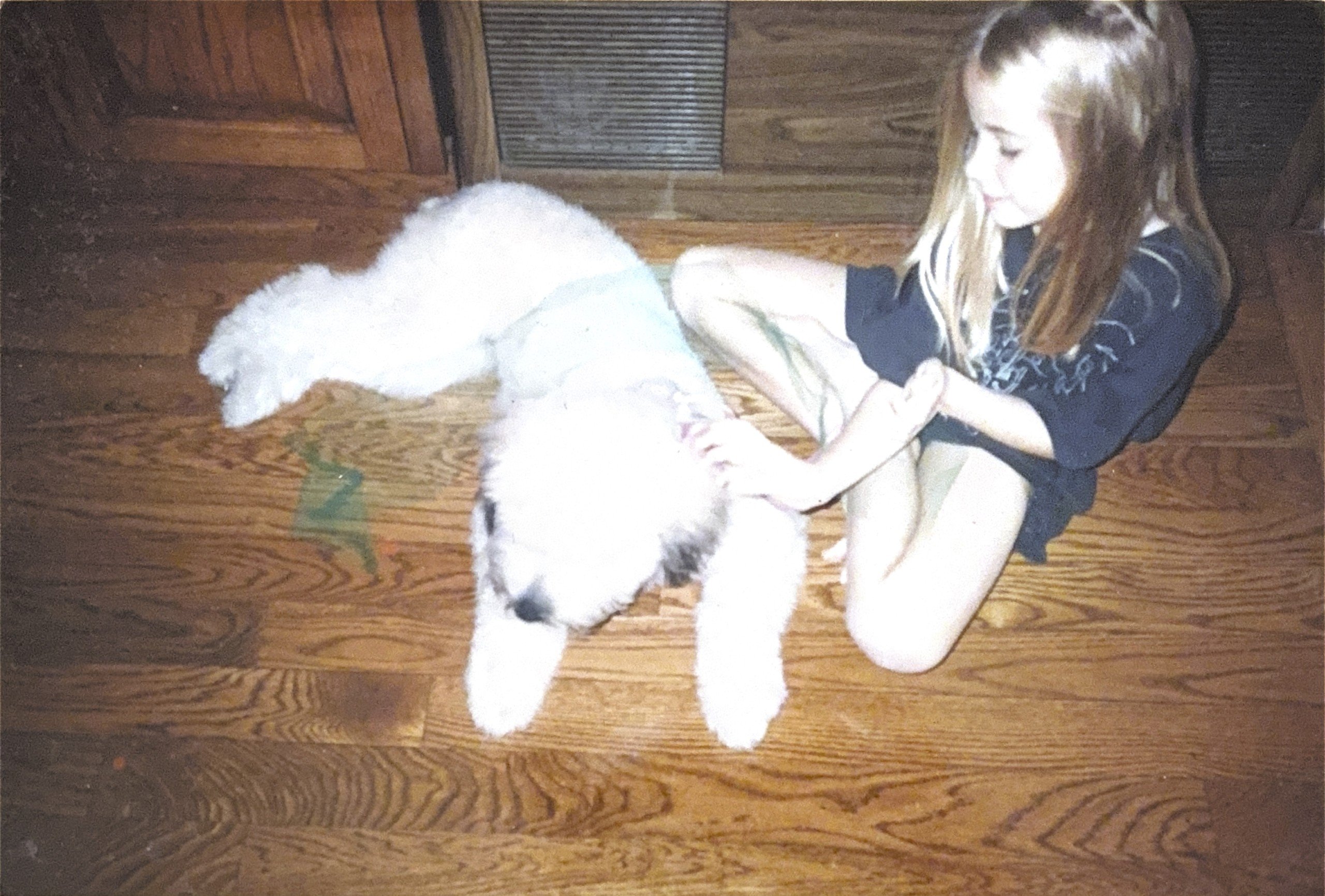
A young Klemick at home.


Today, I am a furniture designer and a woodworker. The forms I build—large bases, oversized curves or blank supports—cradle the structures above them in the way my childhood furniture once held me.
The heavy, bell-shaped legs of my chairs convey a quiet gravity. They draw your eyes downward, grounding the piece. And when you sit, they hold you with a steady and reassuring weight crafted by hand from solid wood.
These structures feel lasting, almost unbreakable in a world full of chaos and uncertainty— sometimes even within a house touched by those things. I want my work to offer both visual and physical comfort. Good design supports function, but moves beyond it. It invites feeling. It can offer safety and calm.
I’ve never consciously looked back at my childhood home for inspiration. I’ve always [told myself] that my work draws from the city of Miami, the feeling of vacation, sling chairs inspired by hammocks, the sunlight. I use Brightwood’s natural finishes, colors that feel breezy and cheerful.
Yet this reflection makes it clear that my work has been shaped by the solidity and weight of the rooms I grew up in. As a child, I didn’t realize I was surrounded by future heirlooms, objects that reflected our family history and the tools of their makers. The old table we played cards at is still in our family, now in my sister’s home. Its finish has worn thin, faded in places, but she’s never refinished it. That wear and patina is a record of life, lived a marker of memory even in a new house.
Marks of use and memory give the object its soul, but so does the hand that shapes it. The care and attention poured into its making every object carries the potential to gather life over time. The moments shared around it, the bodies that touch it.
The idea of an object’s endurance is deeply ingrained in my practice today. I use salvaged wood that has already lived a life: beams from old buildings, vintage textiles that I’ve patched and mended. I make things meant to be passed down. Things that change and soften with time—just like the leather sofa, worn table, and plaid chairs, the furniture of my childhood. Pieces that endure, and hopefully, that will one day feel like home to someone else.”
This presentation was part of the inaugural Making Space symposium, which took place in Los Angeles on November 12, 2025, before a live audience. It has been edited and condensed. (Photos courtesy Sam Klemick)