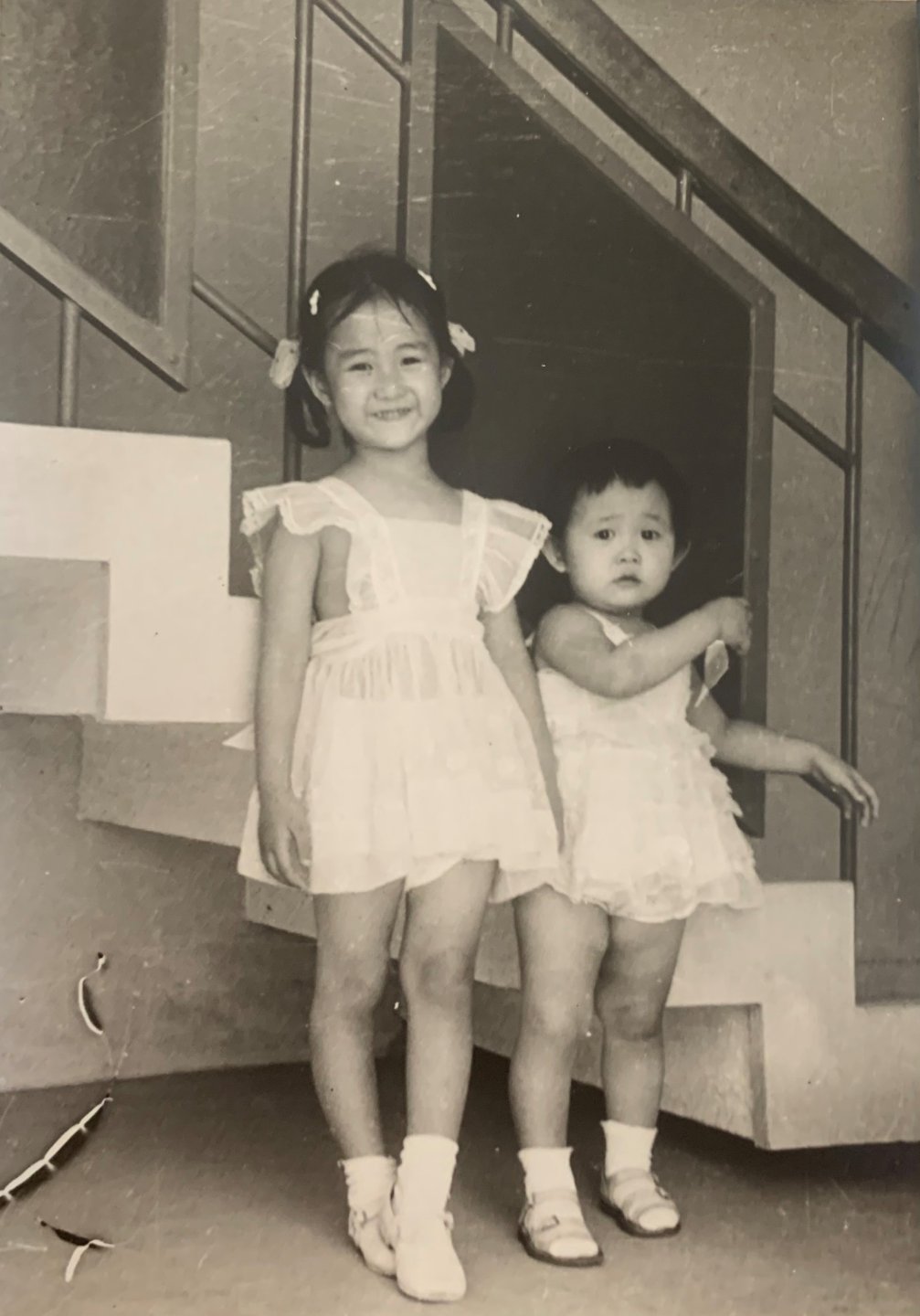
Chu with her sister, Pat. 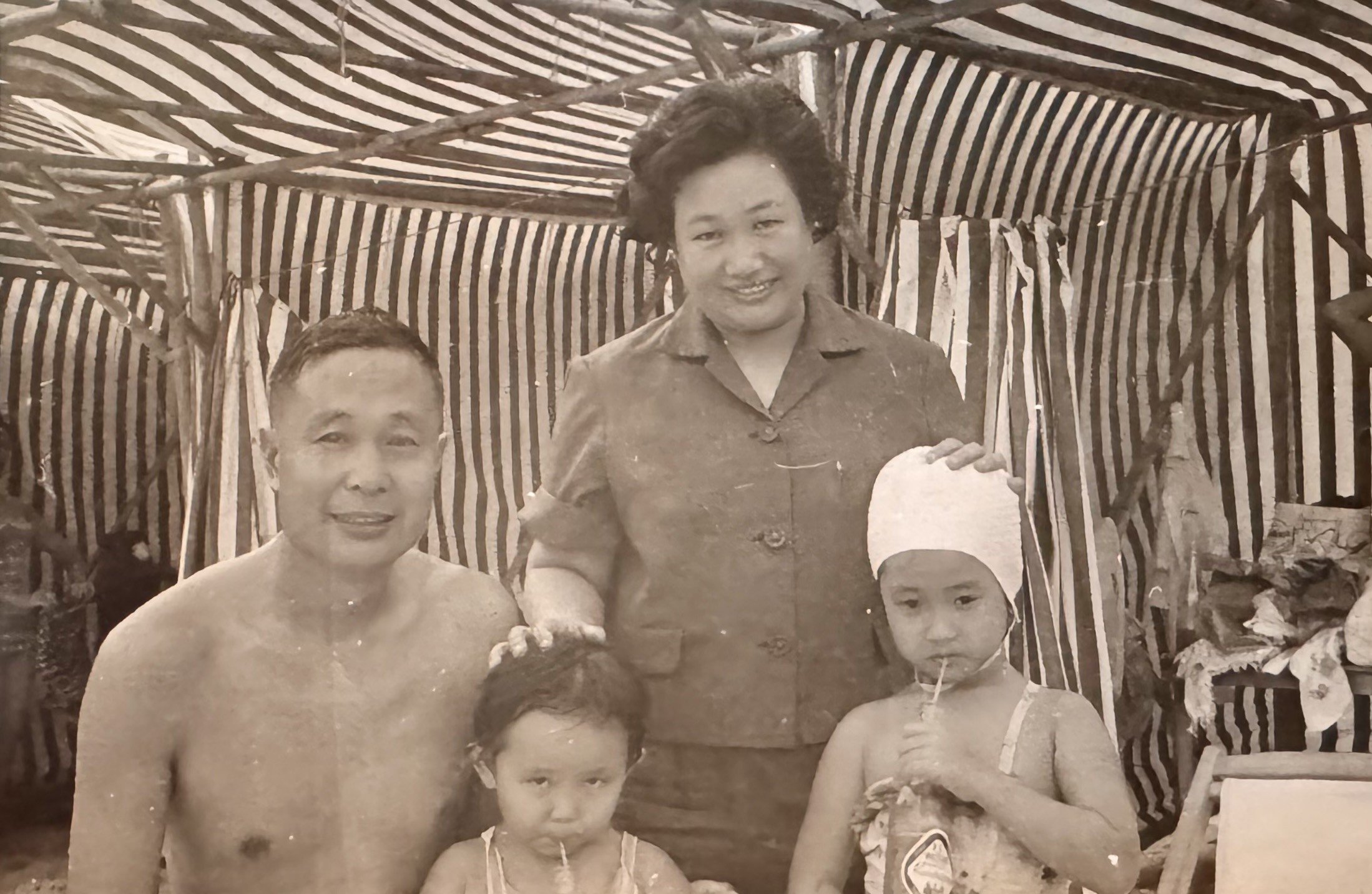
The Chu family, in Hong Kong. 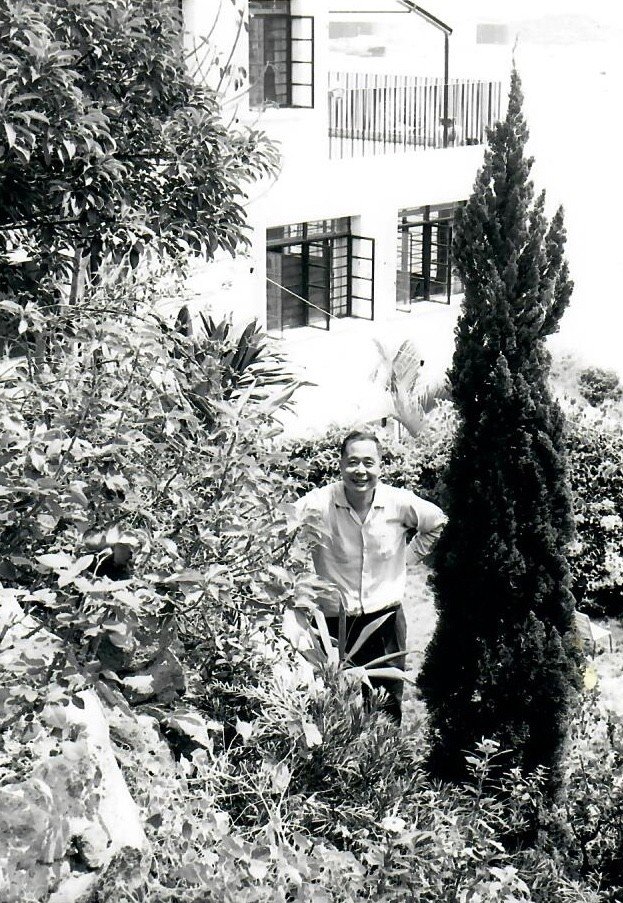
Henry, Chu’s father, was an avid gardener.


Annie Chu is the co-founder of the architecture firm Chu-Gooding.
“I’ve never really looked back at my childhood home, so I decided to write a story [as a way of doing so]. Here it is:
There was a British colonial city in the sixties—which most resembled the chaos and complexity of that place depicted in the film Blade Runner—that came out of the crash of East and West. Out of that inherent complexity were born two sisters, Annie and Pat, to Henry, from Beijing, and Anna, from Shanghai, both refugees fleeing the emergence of communism in China, surrounded by many coastlines.
Beaches were the family’s favorite outings. The thrilling sensation of swimming away from land encouraged the girls to think of leaving the land as a reward [for] correctly reciting their multiplication tables.
Before Annie turned 6, they lived in apartments built by ex-architects for white-collar employees of the British government in Hong Kong. The modern geometry in that environment was somehow nourishing. It provided some delight and a sense of stability, as all the buildings were built in concrete.
As a public-housing administrator working on development, Henry schemed up a way to hire a Canadian architect to build a house in the area’s adjoining gardens for his young family. That house was a theater of emotional and physical memories until Annie left home for the United States, at 16.
Through the lens of geometry, of rectangles and squares, the sisters shared the observation of the surrounding landscape being sliced into little strips—notions of positive and negative [spaces] they were not able to articulate until they went to art and architecture school many years later.
Henry was a passionate gardener. Dinners did not begin until nearly 8:00 p.m., when he returned from gardening at the end of a full day at the office. For Annie, this prompted a lifelong perception of the cultivated landscape as an adversary, one that took her dad’s attention away from the girls.
The only time worth being out in the garden for Annie was when Tommy, the dog, was playing, or during weekly barbecue parties, when the weather was pleasant for the longest. Yet it was only from the interior that Annie could appreciate the landscape and the potential dialogue between the [interior and exterior] realms.
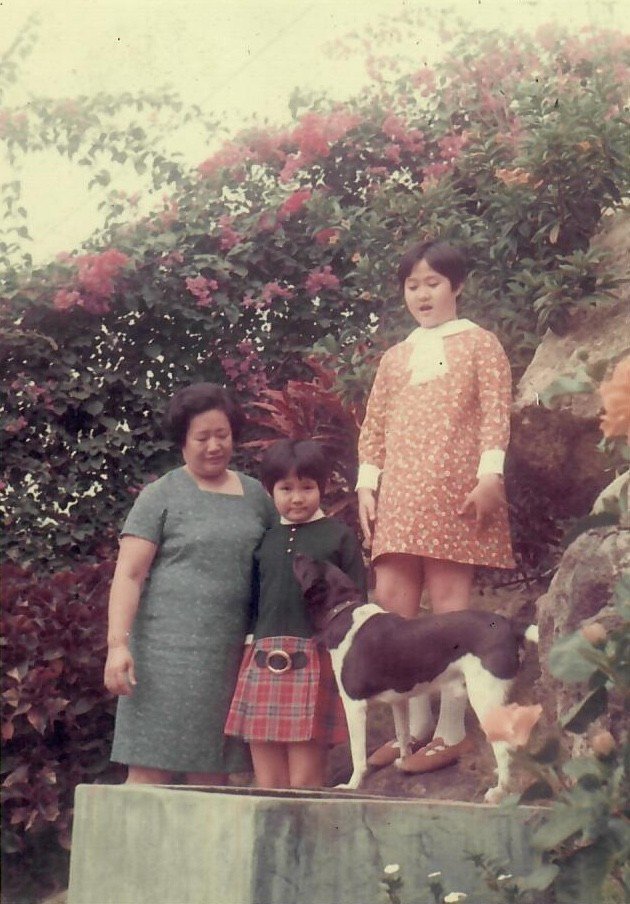
The Chu family with their dog, Tommy. 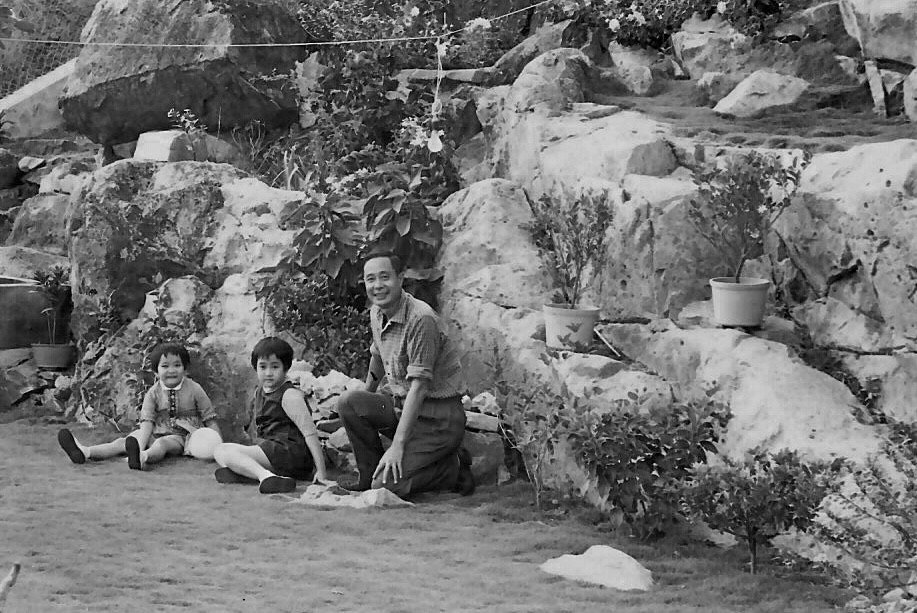
The Chu sisters with their father, Henry. 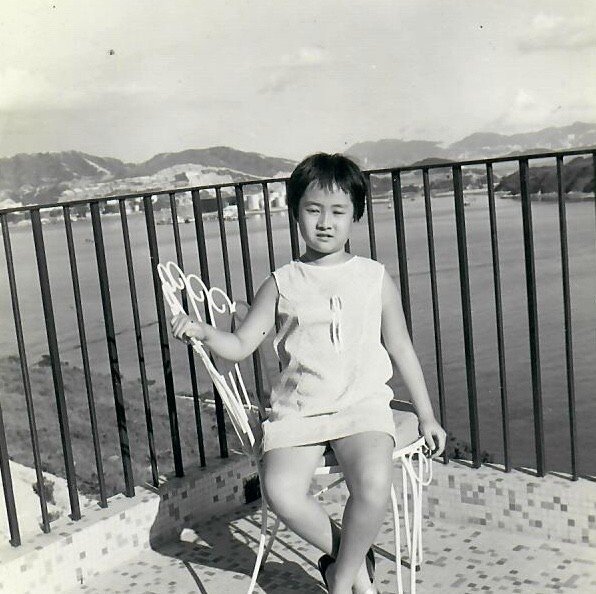
A young Chu, on a chair by the water.


Although Annie thought of it logically as a whole house, her ten years’ worth of memories existed as vignettes. It appeared to her that the house did not really love its [view]. The square, geometric form of the house cut into a hill. It left craggy granite walls and rough ground between the hill and the house. One could walk into that space, that leftover space, but was always at the risk of running into snakes and moths the size of salad plates.
The unresolved clash of those geometries was annoying and difficult for the young girls, though they had no words for it. This unintentional form of aesthetic practice caused the girls to always imagine what better versions of what was around them could be. (Annie later became an architect and interior designer, and Pat, a graphic designer.)
Stepping into the house through the varnished wood floor, the children’s feet transitioned from the rough concrete landing to the smoothness of one of the two most significant architectural elements of their home: a shiny, black-vinyl tile landing. Two steps down to a hand-waxed wooden floor was a tall run of stairs, all the way up to the upper level, with its dark green–painted steel sash windows.
It was on the sills of these favored windows that Annie and Pat discovered an array of insect eggs. The repetitive forms of dots brought to them a creepy-crawly sensation of fear that would later be revealed by its clinical name: trypophobia. To this day, the women do not spend much time looking up at showerheads.
The girls had strong memories of the home’s furnishings, materials, and colors, and the ways they were constructed and then reverse-engineered in their minds. The girls’ bedroom, for instance, saw several furniture arrangements when they were little. Annie and Pat’s beds were side by side to make room for their caretaker’s bed. When Pat spun around so much in her sleep that she repeatedly kicked her sister and wound up on the floor in the morning, the beds were pulled apart. To this day, Annie does not trust any plan that cannot accommodate various furniture, arrangement, and usage.
Annie [often thought of] the dog Tommy, who had his own house right outside the rear bedroom, and always lived between two worlds. She wondered what it was like to straddle spaces—spaces that seemed to be both interior and exterior. The nuances that flipped them one way or another continued to fascinate her.”
This presentation was part of the inaugural Making Space symposium, which took place in Los Angeles on November 12, 2025 before a live audience. It has been edited and condensed. (Photos courtesy Annie Chu)